
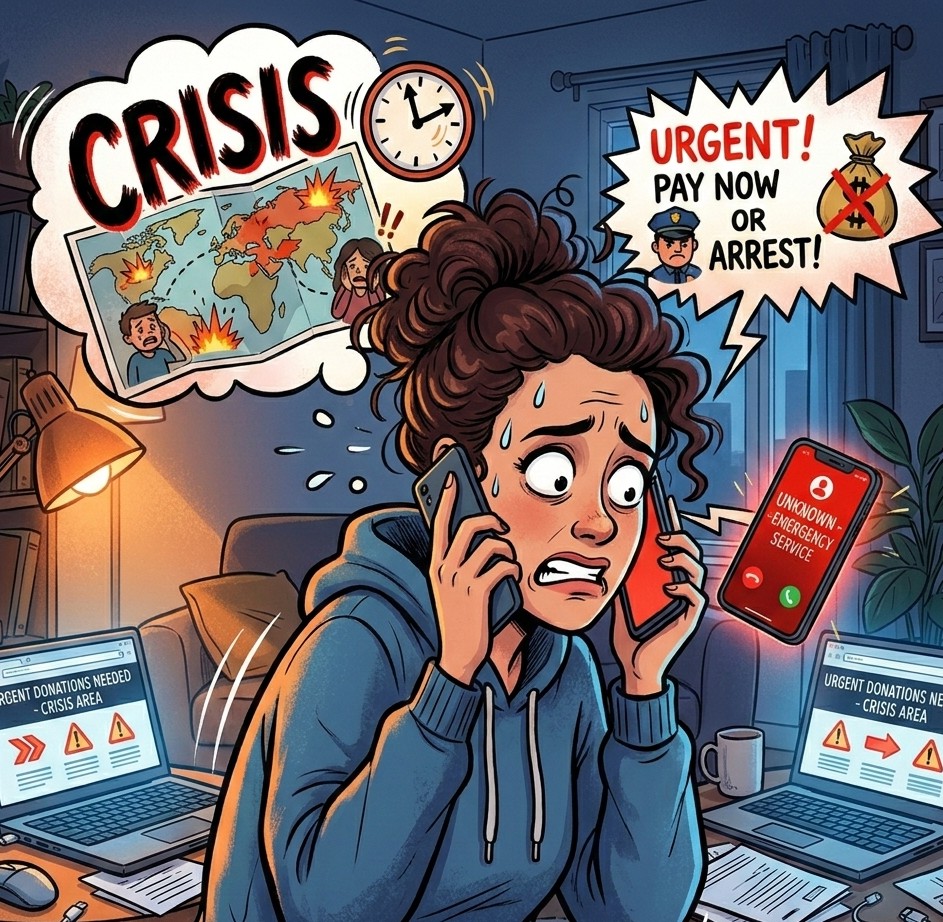
 Dubai Police recently issued a high-priority warning regarding fraudsters exploiting the current Middle East crisis. These scammers impersonate employees from the "Dubai Crisis Management" department, falsely claiming links to law enforcement to harvest sensitive data, their primary goal involves obtaining UAE Pass credentials and Emirates ID details. While these criminals often use such information to execute SIM swap operations, the threat extends far beyond mobile identity. Once the scammers control a victim's digital identity, gaining access to bank accounts and government services becomes a trivial task.
The Mechanics of Acting Without Thinking
Scammers rely on a psychological state known as "amygdala hijack," where a perceived threat triggers a rush of stress hormones prioritising immediate action over logical analysis. When a message appears to originate from an official body during a regional emergency, the recipient often feels overwhelming pressure to comply to ensure personal safety. In the warning the Dubai Police reiterated they never request confidential information or verification codes via telephone calls or text messages.
Global Examples of Crisis-Based Scams
History shows any event causing public anxiety serves as a catalyst for fraudulent activity. Beyond the Middle East, several other notable examples demonstrate the versatility of these predatory tactics:
- Natural Disaster Relief Fraud: Following major earthquakes or hurricanes, scammers frequently establish fake charitable organisations. They use emotionally charged imagery and urgent pleas to divert donations away from legitimate relief efforts into private accounts.
- The Global Pandemic Response: During health crises, fraudsters send millions of phishing emails masquerading as health authorities. These messages often contain malicious links promising urgent updates or vaccine registration, resulting in widespread credential theft.
- Energy and Supply Chain Fear: In regions facing soaring utility costs or shipping disruptions, criminals pose as providers or logistics agencies. They threaten immediate service disconnection or cargo seizure unless the victim pays a "mandatory fee" immediately.
- Family Emergency Scams: Fraudsters often target vulnerable individuals by pretending to be a relative in distress. They claim to be in a car accident or a foreign jail, pleading for immediate funds while insisting on absolute secrecy.
Beyond the Immediate Theft: The Full Spectrum of Risk
Focusing solely on immediate financial loss ignores the broader dangers of identity harvesting. When a fraudster obtains a government ID or a digital signature, they gain a master key to a person’s entire legal and digital life.
- Financial Laundering: Criminals use stolen identities to open "mule" bank accounts. These accounts move illicit funds across borders, leaving the innocent victim legally responsible for money laundering.
- Document Forgery: Armed with personal details, scammers produce professional-looking forged contracts, visas, or employment offers. These forged documents lure others into secondary scams.
- Digital Identity Takeover: Digital credentials provide access to health records, legal documents, and property registrations. An attacker can alter official records or commit large-scale administrative fraud in the victim's name.
Identifying the Trap: Red Flags
Fraudsters frequently refine their methods to exploit human emotion. Recognizing specific indicators of a scam is essential for protecting personal assets.
- Manufactured Urgency: Messages often contain threats of immediate account suspension or legal action. This pressure aims to prevent you from verifying the claim.
- Unsolicited Requests: Legitimate organisations never request passwords or national ID details via phone.
- Suspicious Links: Scammers use shortened URLs directing victims to fraudulent websites mimicking official portals.
- Inconsistent Information: Forged documents often contain wording differing from approved official templates or use fake signatures.
Proactive Steps to Avoid Falling Victim
Maintaining a secure digital presence requires a combination of technical safeguards and cautious behaviour.
- Verify the Source Never use contact details provided in a suspicious message. Use official channels like the 901 call centre in Dubai or verified government websites found through independent searches.
- Enable Advanced MFA Use app-based authenticators or hardware keys resistant to interception. These provide a layer of security far superior to standard SMS codes.
- Secure Personal Data Treat a national ID and digital credentials with the same level of secrecy as a physical house key. Never share photos of these documents on social media or messaging platforms.
Report Activity
Use official cybercrime platforms to report any attempted fraud. Immediate reporting helps authorities track and disable the infrastructure used by these criminal networks.
By adopting a "verify then trust" approach, you can effectively navigate the digital landscape even during times of high tension.
- Log in to post comments