
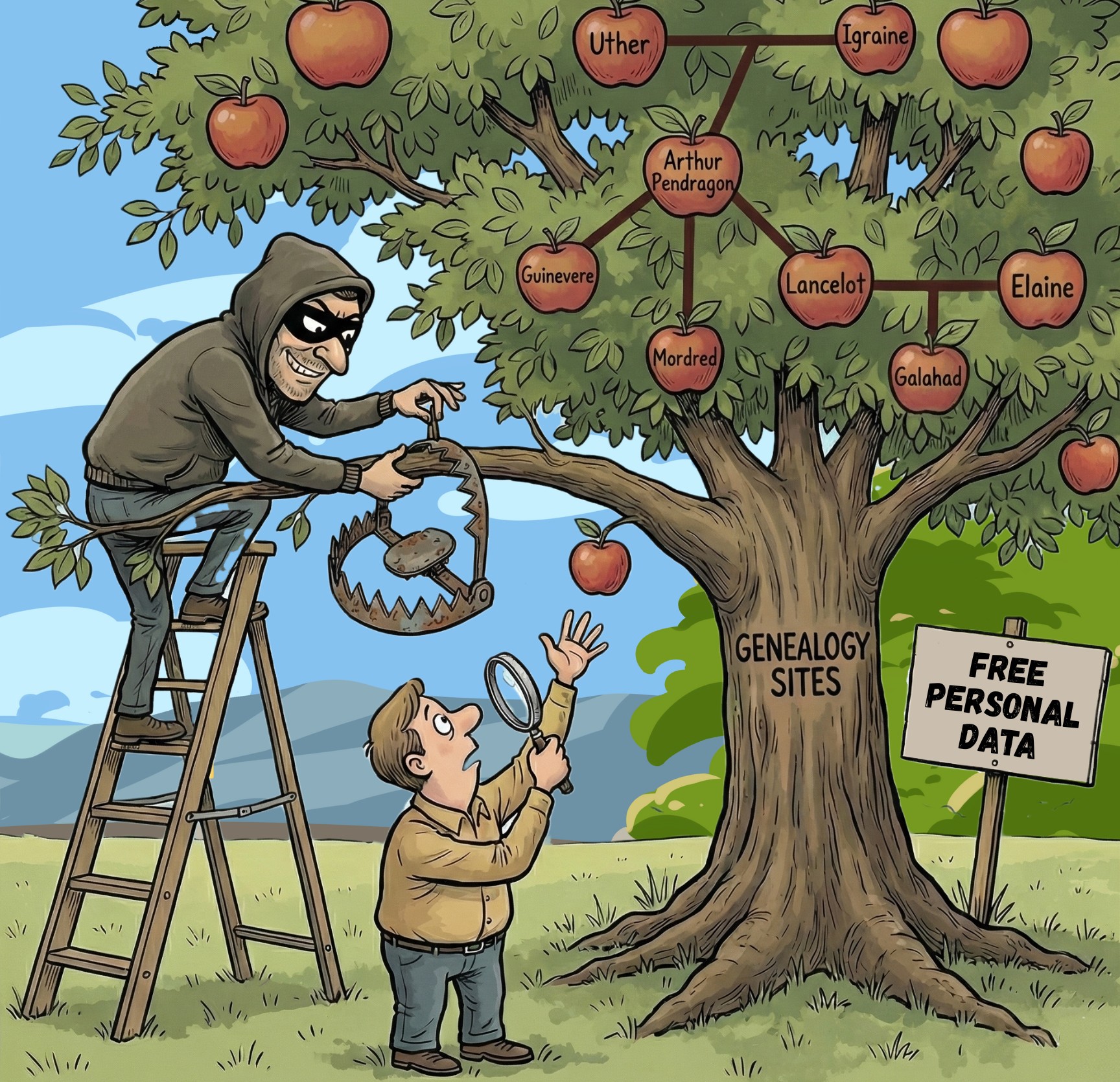
 For millions of people worldwide, submitting a DNA sample or building an online family tree is an act of trust; it is about identity, belonging, and reconnecting with lost history. Genealogy platforms have turned this deeply personal pursuit into massive digital ecosystems built on shared information and emotional connection. What most users do not see is how valuable these platforms have become to professional fraud networks.
This is not a story about hacked databases or leaked DNA. It is about the deliberate exploitation of information people willingly publish, amplified by the use of artificial intelligence to analyze, expand, and weaponize family history at scale.
From Family History to Open Source Intelligence
Modern genealogy platforms now function as open source intelligence repositories; public family trees reveal verified names, relationships, birthplaces, migration paths, and emotional narratives scammers once struggled to assemble. Artificial intelligence systems are increasingly used to scrape this data in bulk. AI models can map entire family structures, detect undocumented or weak branches, and flag individuals most likely to engage with messages about lost relatives, inheritance, or family emergencies.
AI Built Relatives and Synthetic Lineage
Fraudsters are no longer limited to manual impersonation. AI tools are now used to generate realistic genealogy profiles fitting seamlessly into real family trees. Names are historically accurate, dates align with known births and deaths, and migration patterns mirror real population movement. Profile photos are often AI generated, often mimicking familial appearance characteristics and birthmarks, increasing a perceived connection.
Once inserted, these synthetic relatives behave patiently. AI assisted messaging maintains long term conversations, adapts tone and emotion, and builds rapport over weeks, months and even years. The scammer may not even actively engage until a victim is emotionally invested.
The New Generation of Genealogy Based Scams
The Long Con Relative
Scammers identify gaps in family trees and insert themselves as distant relatives. They establish trust slowly using real details taken from public records and the victim’s own genealogy data. Financial emergencies are introduced only after a strong emotional bond is formed.
The Precision Grandparent Scam
Public family trees give scammers exact names, locations, and relationships. Combined with AI voice cloning sourced from social media, victims may hear what sounds like their actual grandchild asking for urgent financial help. This removes doubt and accelerates compliance.
Inheritance and Heir Hunting Fraud
Criminals exploit real deceased relatives listed on family trees. Victims receive convincing legal correspondence referencing actual names and dates. Fees are demanded to release non existent estates. Once paid, the scammers disappear.
Silent Account Takeovers
Public trees quietly provide answers to common security questions. Scammers use harvested family data to bypass account protections on email, banking, and retail platforms.
Why This Works So Well
Genealogy platforms are built around a powerful human instinct: the need to belong. People are naturally driven to seek connection, continuity, and meaning in their family history. Discovering a new relative or uncovering a forgotten branch of a family tree triggers curiosity, hope, and emotional investment long before skepticism has a chance to engage.
These platforms actively reward openness. Public family trees generate more matches, more messages, and more perceived success. Each new connection reinforces the idea sharing leads to discovery. As a result, many users leave privacy settings unchanged or misunderstand what visibility actually means.
Public, in this context, does not mean visible only to fellow hobbyists. It means accessible to anyone, including individuals with malicious intent who are not interested in ancestry, only in exploitation.
Artificial intelligence removes nearly all remaining barriers. What once required years of manual research, archival digging, and human intuition can now be accomplished in minutes. AI systems can analyze thousands of family trees simultaneously, identify emotional entry points, and construct believable narratives with minimal effort. The work of trust building is no longer performed by a skilled con artist alone. It is automated, optimized, and scaled.
The result is a perfect storm. Human psychology encourages openness and belief. Platform design amplifies sharing. Artificial intelligence accelerates analysis and impersonation. Together, they create an environment where deception does not feel like a threat, but like a long awaited connection finally being found..
A Brief Note on DNA Collection
There is occasional concern physical DNA such as hair or discarded personal items could be exploited. For ordinary users, this is not a realistic threat and not how genealogy scams operate.
In rare cases involving extremely wealthy or high profile individuals, targeted DNA misuse is theoretically possible, but it requires specialized resources and intent well beyond typical fraud activity. For everyday users, scammers do not need DNA. Shared family history and AI driven profiling already provide everything required. The real risk is not stolen genetic material. It is oversharing.
How to Protect You and Your Family History
Cybersecurity experts recommend treating genealogy data as sensitive information.
- Set all family trees to private and unsearchable
- Automatically hide information about living relatives
- Avoid publishing detailed narratives, locations, or dates
- Establish a family verification phrase to defeat AI impersonation
- Independently verify any claims involving emergencies or inheritance
Our ancestry tells the story of who we are. In the digital age, you story has also become a dataset. Protecting family history is no longer just about preserving the past, it is about defending the present against exploitation enabled by artificial intelligence.
- Log in to post comments