
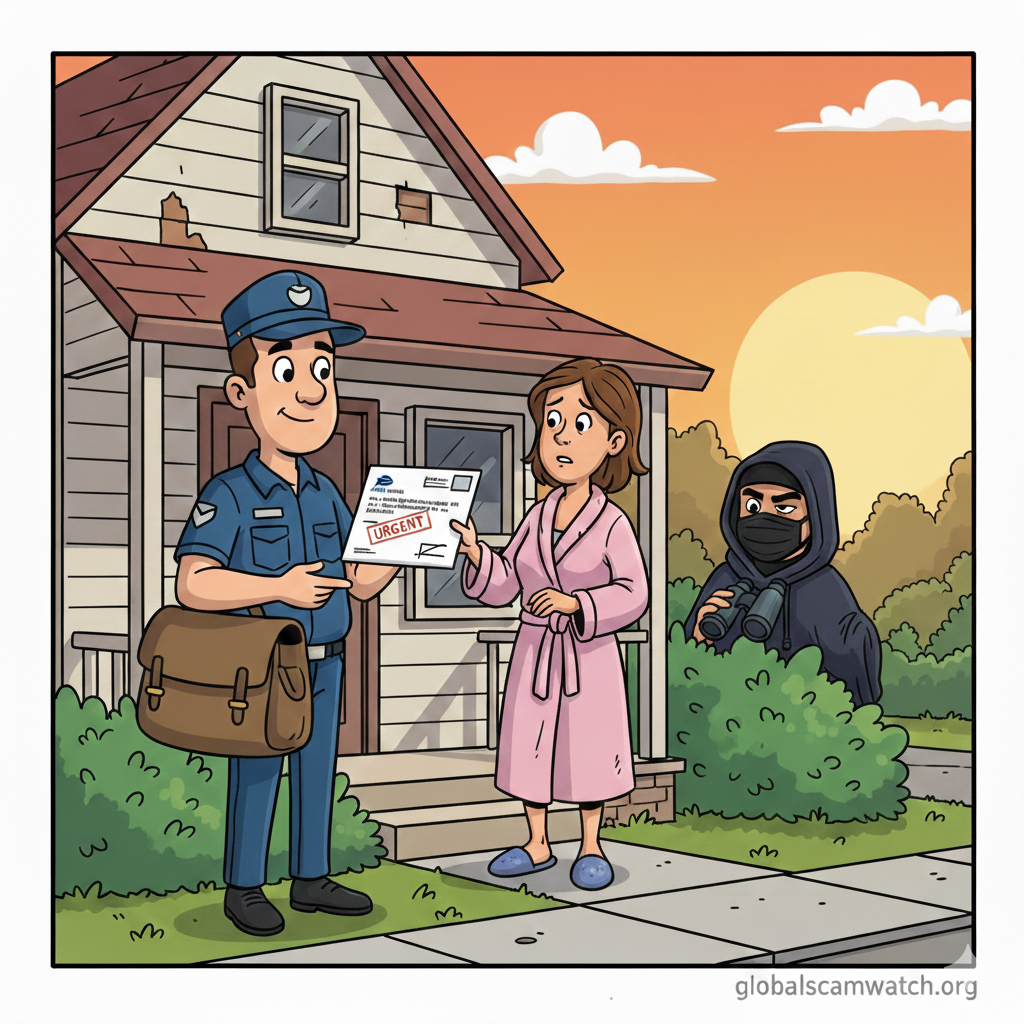
 Organized crime syndicates are deliberately pivoting away from mass digital phishing and back toward a far older vector of deception: physical mail. A growing wave of fraudulent registered letters tied to alleged utility infrastructure obligations, regulatory compliance, and estate related claims signals a calculated evolution in global scam operations. These campaigns exploit the authority of official postal systems, bypass digital security controls, and leverage the psychological weight that physical correspondence still carries worldwide.
REGISTERED MAIL AS A WEAPON
Registered mail is central to the effectiveness of these schemes. Unlike ignored emails or anonymous envelopes, a registered letter demands a signature, instantly conveying seriousness and authority. This forced interaction creates pressure and ensures the recipient physically engages with the demand before skepticism has time to intervene. The formality of registered correspondence closely mirrors legitimate legal or regulatory notices, allowing fraudulent payment demands and legal styled notifications to appear procedurally valid.
QR CODES AND THE PHYSICAL TO DIGITAL BRIDGE
QR codes now function as the connective tissue between paper based fraud and digital exploitation. Many registered letters include QR codes presented as verification portals, document access points, payment gateways, or case file links. Scanning these codes redirects victims to credential harvesting pages, payment processors, or malware laden sites. Because QR codes obscure destination URLs and bypass traditional filtering systems, they convert physical trust into rapid digital compromise.
PRESSURE AND AUTHORITY TACTICS
These operations rely on reinforcing psychological levers designed to suppress scrutiny. Artificial urgency is introduced through short deadlines, threats of legal escalation, service disruption, or forfeiture of funds. False specificity appears through property imagery, street level targeting, fabricated reference numbers, and official looking letterhead. Authority is reinforced through references to utilities, courts, law firms, financial institutions, and law enforcement agencies. Together, these elements overwhelm rational verification pathways.
GLOBAL PATTERNS OF REGISTERED MAIL FRAUD
While the underlying model is consistent, execution varies by region.
🇨🇦 Canada: Registered letters commonly impersonate utilities, demanding payment for power pole replacements.
🇦🇺 Australia: Registered letters commonly allege solar installation non compliance, asserting that an inspection, certification review, or mandatory upgrade is required, with payment demanded to resolve the issue.
🇺🇸 United States: Letters often cite municipal sewer or water line assessments framed as mandatory homeowner contributions.
🇪🇺 European Union: In countries such as 🇫🇷 France and 🇪🇸 Spain, registered correspondence may impersonate law enforcement or regulatory authorities, threatening legal consequences unless payment is made.
🌍 Global Layer: Estate and inheritance letters operate across all regions rather than within any single country profile. These notices claim the recipient is a beneficiary of an unclaimed or foreign estate and require fees, identity documents, or QR based verification to proceed.
THE MONEY MULE AND LAUNDERING INFRASTRUCTURE
Behind these letters sits a structured, multi layered criminal enterprise. Syndicates rely on local money mules to print, post, and sometimes collect payments within the target country, producing domestic postmarks that significantly increase perceived legitimacy. This infrastructure facilitates money laundering by creating transaction layering that obscures the origin of illicit funds. Recruitment commonly occurs through deceptive work from home postings, drawing individuals into criminal activity without full awareness of their role.
WHY RESIDENTS AND RECIPIENTS ARE TARGETED
Infrastructure demands and estate notifications exploit the same psychological vulnerabilities: obligation and perceived legitimacy. Utilities retain responsibility for public infrastructure assets, and residents have no legal liability for external utility equipment. Legitimate inheritances are never initiated through unsolicited registered letters demanding fees, QR scans, or urgent responses. These narratives are engineered to exploit uncertainty, emotional response, and unfamiliarity with legal and regulatory boundaries.
GLOBAL REPORTING CHANNELS
Recipients of fraudulent registered mail should report the incident to their national anti fraud authority.
🇨🇦 Canada: Canadian Anti Fraud Centre at 1 888 495 8501 or online reporting.
🇺🇸 United States: Federal Trade Commission via reportfraud.ftc.gov.
🇬🇧 United Kingdom: Action Fraud at actionfraud.police.uk.
🇦🇺 Australia: Scamwatch at scamwatch.gov.au.
🇸🇬 Singapore: National Crime Prevention Council via scamalert.sg.
🇮🇪 Ireland: An Garda Síochána at garda.ie.
🇩🇪 Germany: Polizei internet crime portal at polizei.de.
🇳🇿 New Zealand: Netsafe at report.netsafe.org.nz.
🇿🇦 South Africa: Cybersecurity Hub at cybersecurityhub.gov.za.
Verification should only occur through independent, official channels located on confirmed utility websites, court registries, or prior verified billing statements. Any registered letter demanding immediate payment, QR code scanning, or urgent action should be treated as fraudulent until independently verified.
- Log in to post comments