
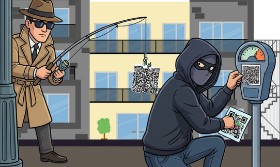
 The digital backbone of global diplomacy and international research is now facing a more refined and dangerous cyber threat. State sponsored actors are no longer relying on obvious malware or crude phishing. According to a recent FBI warning, North Korea linked cyber units have significantly evolved their methods to quietly bypass modern security defenses.
One group in particular, Kimsuky, long focused on the Korean Peninsula, has expanded its operations far beyond the region. Their latest campaigns now directly target policy makers, researchers, and institutions across the United States, Europe, and Japan.
THE RISE OF QUISHING
Quishing, short for QR code phishing, represents a major shift away from traditional malicious links.
Instead of embedding harmful URLs directly in emails, attackers place them inside QR codes. This exploits a critical weakness in enterprise security systems. Most desktop security tools scan links and attachments, but when a QR code is scanned using a personal or unmanaged mobile device, the victim is instantly removed from the protected corporate environment.
Once scanned, the QR code redirects the target to a mobile optimized phishing page. These pages are designed to steal login credentials or capture session tokens. In the most serious cases, attackers can bypass multi factor authentication entirely by hijacking active sessions, allowing persistent access to sensitive cloud accounts without triggering standard alerts.
WHY THIS THREAT AFFECTS EVERYONE
This tactic is not limited to policy makers or government targets. Quishing is now being used against business executives, employees, and the general public.
QR codes can be deployed almost anywhere. They appear in emails, social media posts, websites, parking meters, restaurant menus, transit systems, and public advertising. Attackers frequently use physical stickers to cover or replace legitimate QR codes with malicious ones, turning everyday locations into silent attack points.
Because QR codes feel routine and trustworthy, victims often scan without hesitation. One scan can lead to credential theft, account takeover, financial fraud, or malware installation.
This is what makes quishing so dangerous. It blends seamlessly into daily life, bypasses traditional security tools, and targets anyone with a smartphone.
A GLOBAL SCOPE
This threat is no longer regional, Kimsuky now operates as a global espionage network, actively targeting NGOs, think tanks, universities, and foreign ministries worldwide. Recent campaigns have impersonated foreign policy advisors, embassy staff, and senior fellows from well known international organizations.
In Europe and Asia, these actors frequently play the long game. Victims may receive months of realistic and professional correspondence before being sent a so called secure document or conference invitation delivered through a malicious QR code. Some campaigns have even used AI generated content to enhance credibility.
The objective is clear. Steal diplomatic communications, geopolitical analysis, and intellectual property that can influence sanctions, negotiations, and international relations.
SOPHISTICATED SOCIAL ENGINEERING
The FBI warning highlights just how polished these operations have become. Documented tactics include:
- Impersonating high profile policy experts to solicit input on international security matters
- Sending fake invitations to non existent global conferences designed purely for credential theft
- Deploying mobile focused malware, including Remote Access Trojans capable of monitoring communications and location data
These are not mass spam campaigns. They are carefully tailored operations aimed at high value targets.
BEYOND ESPIONAGE: THE FINANCIAL NEXUS
These cyber operations are often tied to large scale financial schemes. North Korea linked actors have been connected to fraudulent remote IT worker programs that infiltrate major corporations worldwide. Using stolen identities and overseas laptop farms, these operatives generate hundreds of millions of dollars for state programs while embedding themselves as insider threats for future cyber operations.
This dual purpose model blends espionage, revenue generation, and long term network access.
PROTECTING THE POLICY COMMUNITY
As personal and professional devices continue to overlap, security experts are urging organizations to treat QR codes with the same suspicion as unsolicited links.
Effective protection requires a mindset shift:
- Verify the source of any QR code through a separate communication channel before scanning
- Extend security controls to mobile devices that access corporate data, including secure mobile browsers
- Update training programs to reflect modern threats, as state sponsored campaigns are now fluent, professional, and patient
This evolution in cyber warfare shows that the threat is no longer isolated or regional. It is a sustained global challenge aimed directly at the integrity of international research, diplomacy, and policy making.
- Log in to post comments