
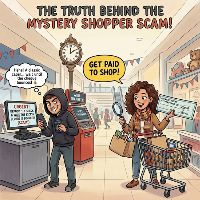
The "Mystery Shopper" scam remains a persistent global threat targeting job seekers by exploiting the appeal of flexible income. At its core, this scheme is built on financial deception, convincing victims to deposit counterfeit cheques or participate in what appear to be legitimate evaluation tasks that are actually tied to fraud or money movement.
𝗧𝗵𝗲 𝗠𝗮𝗻𝘆 𝗙𝗮𝗰𝗲𝘀 𝗢𝗳 𝗧𝗵𝗲 𝗦𝗰𝗮𝗺
This scam has survived for decades because it constantly adapts, using different methods to appear credible while achieving the same outcome: separating victims from their money or using them as intermediaries in criminal activity.
The counterfeit cheque trap remains one of the most common tactics. Victims receive realistic looking cheques complete with corporate branding and instructions to deposit the funds, keep a portion as payment, and use the remainder to evaluate a financial service. The funds may appear available at first, but once the cheque is identified as fraudulent, the bank reverses the deposit and the victim is left responsible for the full amount.
Gift card laundering is another fast moving variation. Victims are directed to purchase gift cards such as Amazon, Apple, or prepaid Visa cards, then send photos or provide the card numbers and PINs as proof. The value is drained almost instantly, leaving no way to recover the funds.
More advanced versions involve digital wallets and cryptocurrency. Victims are instructed to test online payment platforms or exchanges by transferring money into accounts controlled by scammers. Unlike traditional fraud, these transactions are typically irreversible.
Some are drawn into parcel mule operations under the guise of testing shipping services. Packages purchased with stolen credit cards are delivered to the victim, who is then instructed to repackage and forward them, unknowingly participating in the laundering of stolen goods.
Others encounter full onboarding scams where fake contracts, payroll systems, and banking forms are provided. This information is later used for identity theft or to move money through the victim’s account without their knowledge.
𝗧𝗵𝗲 𝗥𝗼𝗹𝗲 𝗢𝗳 𝗣𝗿𝗼𝗳𝗲𝘀𝘀𝗶𝗼𝗻𝗮𝗹 𝗔𝘀𝘀𝗼𝗰𝗶𝗮𝘁𝗶𝗼𝗻𝘀
Legitimate mystery shopping is a real industry with strict standards. The primary global body is Mystery Shopping Professionals Association, which operates through regional chapters including MSPA Americas, MSPA Europe/Africa, and MSPA Asia/Pacific.
These organizations do not hire shoppers directly. They maintain directories of vetted companies, and legitimate assignments never involve advance payments or upfront fees. Any offer that includes being sent money before work is completed is a clear warning sign.
𝗜𝗻𝘁𝗲𝗿𝗻𝗮𝘁𝗶𝗼𝗻𝗮𝗹 𝗢𝘃𝗲𝗿𝘀𝗶𝗴𝗵𝘁 𝗕𝗼𝗱𝗶𝗲𝘀
Additional organizations help reinforce ethical standards and verify legitimate operations, including International Mystery Shopping Alliance, ESOMAR, Singapore Retailers Association, and Retail NZ. These groups support transparency and provide guidance for identifying credible opportunities.
𝗥𝗲𝗱 𝗙𝗹𝗮𝗴𝘀 𝗔𝗻𝗱 𝗖𝗼𝗻𝘀𝗲𝗾𝘂𝗲𝗻𝗰𝗲𝘀
Scammers rely on polished emails, mailed letters with cheques enclosed, and social media outreach promising guaranteed positions. The psychology is simple: easy money attracts attention, especially for students, stay at home parents, or anyone under financial pressure.
Common warning signs include requests to deposit a cheque and send money elsewhere, instructions involving gift cards or cryptocurrency, parcel reshipping tasks, instant hiring without any real screening, and unusually high pay for minimal effort. Communication often comes from free email services or anonymous profiles rather than verified corporate domains.
The consequences can be severe. Victims often face significant financial loss when banks reverse fraudulent deposits. Some experience identity theft, while others may be investigated for unknowingly participating in criminal activity such as money laundering or handling stolen goods.
Awareness remains the strongest defense. Always verify opportunities directly through official company websites using independently sourced contact information, not details provided in unsolicited messages.
- Log in to post comments