
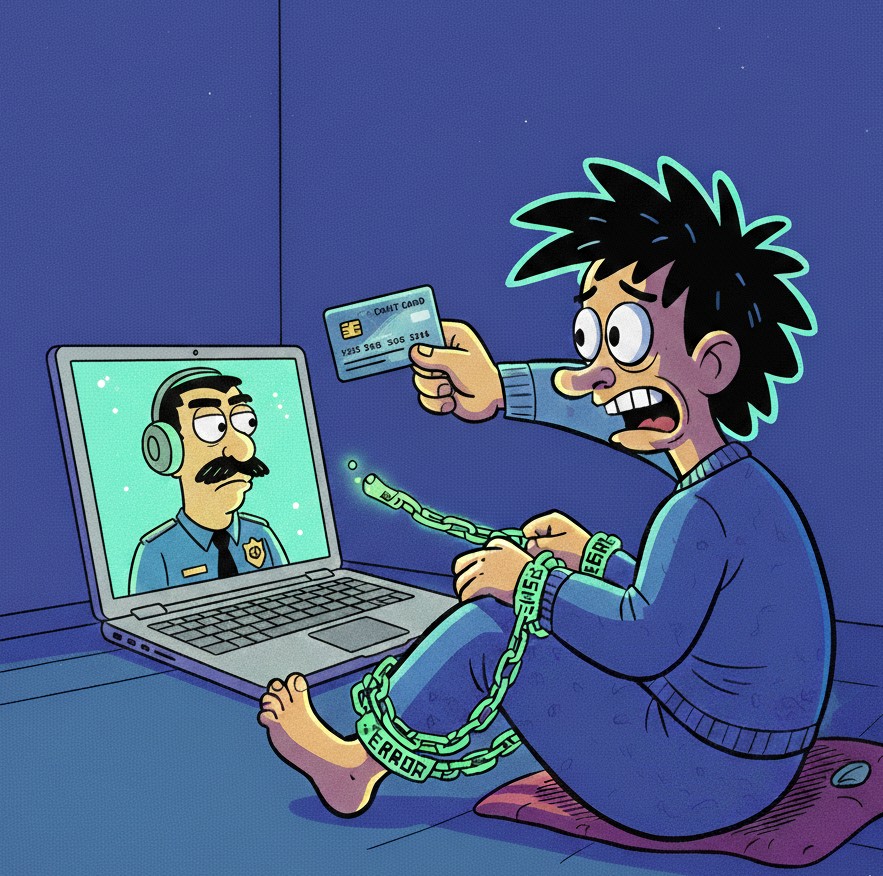
 Across multiple continents, a familiar fraud script is quietly being upgraded. What once appeared as a routine credit card investigator call has now merged with the digital arrest scam model, creating a global scheme simulating a live criminal investigation. Reports of this hybrid approach are emerging from North America, Europe, Australia, and parts of Asia, with local banks and law enforcement agencies names swapped to match regional organisations while the structure remains the same.
A Familiar Opening With the Same Intent
The scam typically begins with a call alleging a credit card has been opened in the victim’s name and immediately used for suspicious purchases. In this newer variation, the transaction itself is chosen to provoke fear rather than confusion. Firearms retailers, sanctioned foreign vendors, or internationally flagged websites are cited to imply criminal exposure. Russian based merchants are increasingly referenced, exploiting geopolitical tension and public sensitivity to elevate urgency.
The Pivot From Banking Issue To Criminal Investigation
Once concern is established, the script escalates quickly. The caller claims the matter can no longer be handled by the bank and must be transferred to law enforcement. This is the point where a routine fraud claim is deliberately transformed into a simulated criminal case, setting the stage for compliance through fear.
Deep-Fake Face Overlay Video As A Tool Of Authority And Control
Instead of directing the victim to a police station or encouraging independent verification, the victim is instructed to join a video call with an alleged investigator or officer. The visual element is intentional. Uniforms, badges, official looking environments, and rehearsed authority cues are used to override skepticism. In more advanced versions, manipulated or deepfake assisted video is used to reinforce legitimacy.
The Mechanics Of A Digital Arrest
Once on video, the victim is placed under continuous psychological restraint. They are warned not to disconnect, not to contact their bank, and not to speak with family or friends, all under the threat of escalating legal consequences. This mirrors digital arrest scams documented globally, where isolation, urgency, and constant supervision replace physical custody.
How Information Is Extracted
Under the pretense of clearing charges or verifying identity, personal and financial information is gathered in stages. Requests commonly include government issued identification, banking details, one time authentication codes, and live screen sharing access. Each step is framed as procedural, urgent, and mandatory, in order to avoid prison.
How To Avoid Becoming A Victim
- The most effective defense is interruption; any call claiming criminal exposure tied to your bank account should be treated as suspicious by default. Hang up and contact your bank or credit card provider using the phone number printed on your card or listed on their official website. Do not rely on numbers, links, or instructions provided during the call.
- Never participate in unsolicited video calls involving financial or legal matters. Law enforcement agencies do not conduct arrests, investigations, or identity verification through video chat, nor do they supervise citizens remotely. Any demand to remain on the line, keep the matter secret, or avoid independent verification is a clear warning sign.
- Do not share one time passcodes, login credentials, identification images, or screen access with anyone who contacts you unexpectedly. These requests are not procedural. They are the mechanism of theft.
- Most importantly, involve another person. Scammers depend on isolation. Speaking to a family member, friend, or bank representative often exposes the deception immediately.
Banks, law enforcement agencies, and government institutions worldwide are unequivocal. They do not initiate investigations through unsolicited calls. They do not conduct arrests or identity verification over phone or video chat. They do not demand secrecy, immediate compliance, or access to personal devices.
Why Awareness Matters Now
These operations depend on speed, fear, and isolation. They unravel when victims pause, independently verify through official channels, or involve another person. As this digital arrest style scam continues to evolve, public awareness remains the most effective defense.
- Log in to post comments