
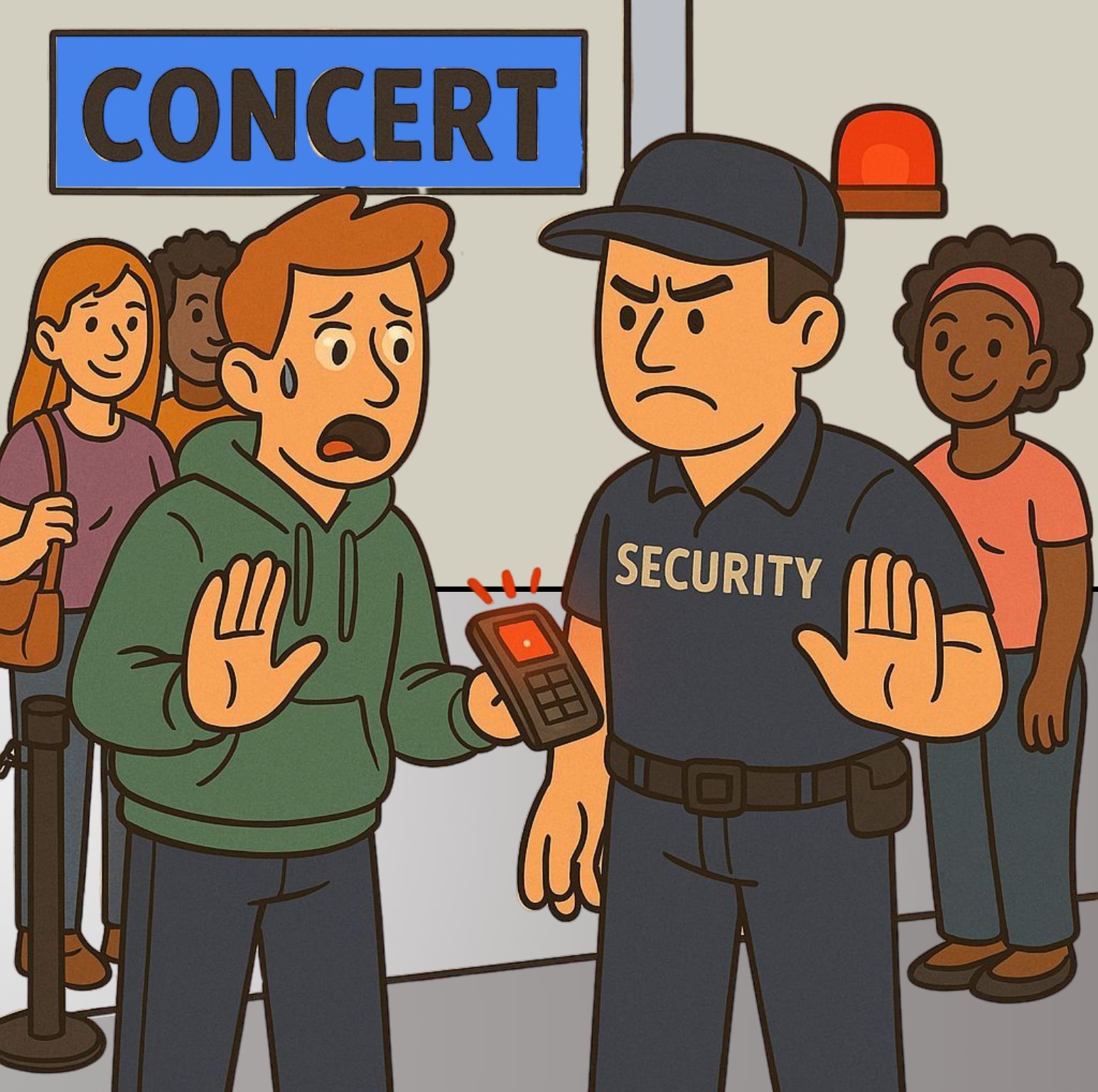
 Around the world, fans are being tricked out of their money and their memories by a growing fraud: clone event ticket websites. These fake platforms mimic trusted sellers with near-perfect precision, with stolen logos, identical layouts, and checkout pages designed to feel completely authentic. They lure people in with the promise of seats to the show of a lifetime, only to leave them with nothing but rejection at the venue doors.
How the Scam Works
The scam starts before a victim even reaches the fake site. Fraudsters invest in online ads, manipulate search results, and seed social media with links to their replicas. In the rush of excitement, many fans click the first link appearing in their results, never pausing to verify whether the address is correct.
Once inside, the illusion is complete. The design mirrors the genuine seller, confirmation emails are often cloned word for word, and countdown timers warn of dwindling availability. Every detail is engineered to create urgency and suppress doubt. The victim is nudged toward a fast purchase rather than careful thought.
Payment is where the deception locks in. Unlike legitimate platforms relying on credit cards with built-in consumer protections, clone sites push buyers toward irreversible channels. Wire transfers, peer-to-peer payment apps, cryptocurrency wallets, and gift cards are all favored. Each gives scammers a clean exit with minimal risk of chargebacks.
The gift card angle deserves special attention. Sometimes victims are instructed to purchase gift cards and send over the numbers, believing it is a secure form of payment. Other times, they are persuaded to provide their credit card details, only for scammers to use those details themselves to purchase gift cards through legitimate retailers. In both cases, the money is instantly converted into a form difficult or impossible to recover.
The result is predictable: a fan with empty pockets, a useless barcode, and no recourse once the fraud becomes clear.
The "Can't Go" Resale Scam
Not every ticket fraud begins on a fake website. One of the most effective and emotionally manipulative versions of this scam plays out entirely on social media, targeting the secondary market directly.
When a high-demand concert or festival sells out, buyers who missed out often search fan groups, Facebook Marketplace, Reddit threads, Instagram, and X for someone willing to part with their ticket. Scammers are ready and waiting. They post convincing messages claiming they purchased tickets months ago but can no longer attend due to a family emergency, a work conflict, a sudden illness, or travel complications. The tone is personal, apologetic, and often urgent. They just want someone to enjoy the event in their place.
These posts are frequently amplified by bots, automated accounts operating in bulk, flooding community groups and event pages with nearly identical messages to create the appearance of widespread availability. According to BBB data, Facebook accounts for approximately 28% of all reported concert ticket fraud cases, with much of this activity concentrated in event-specific groups and marketplace listings.
The seller is often willing to accept a price below face value, which is precisely what makes the approach convincing. Legitimate sellers do occasionally need to offload tickets, and buyers know this. Scammers exploit this reasonable assumption.
Once a buyer expresses interest, the conversation is typically moved to direct messages or a separate platform such as WhatsApp or Messenger, away from any public oversight. The scammer then requests payment by e-transfer, PayPal Friends and Family, Venmo, Cash App, or cryptocurrency, all methods offering no buyer protection. After payment, the seller becomes unresponsive, delivers a screenshot of a ticket already used by someone else, or sends a barcode copied from a publicly shared image.
Another version involves accounts masquerading as fellow fans who were also victimized. These fake victims steer the conversation toward a specific seller, often an accomplice, and vouch for their legitimacy. This layered social engineering makes the deception harder to detect.
In 2024, nearly half of all gig ticket fraud reports in the United Kingdom originated from social media platforms, with total losses more than doubling compared to the previous year to over 1.6 million pounds. The pattern reflects a global shift: scammers are less reliant on polished fake websites and increasingly active in the informal, trust-based spaces where fans naturally connect.
Warning signs specific to the "can't go" resale scam include:
- A seller profile created recently with little or no prior activity, tickets being offered in multiple cities simultaneously from the same account, a backstory involving sudden personal hardship designed to create sympathy and urgency
- Pressure to complete the transaction quickly before another interested buyer steps in
- Refusal to accept credit card payment or use a verified platform with buyer protection
- Unwillingness to transfer the ticket through the official event platform or app.
A Long History in a New Disguise
Ticket scams are not new. For decades, forged paper stubs were sold outside stadiums and arenas by street-level touts. What has changed is reach and sophistication. Instead of tricking passersby at a street corner, today's scammers can target thousands across borders using polished websites, professional payment funnels, and coordinated bot networks operating across every major social platform. The counterfeit ticket has evolved into an entire counterfeit ecosystem within the larger spectrum of Bucketlist Scams
Why It Works
The psychology behind the fraud is consistent across all its forms: fans buy with their hearts, not their heads. When tickets are scarce, emotion overrides caution. A flashing countdown timer or a sympathetic story about a seller who cannot attend pushes buyers to act before they question the details. Scammers exploit this urgency, knowing most people will not notice a slightly misspelled domain name or a brand-new seller profile when the event of their dreams is at stake. Red flags such as tickets offered in multiple cities, brand-new profiles, and deeply discounted prices are consistent indicators of fraud across secondary markets.
How to Protect Yourself
Regulators and ticketing platforms continue to fight these scams, but the reality is sobering: clone sites shut down in one place can reappear under a new name within hours, and social media accounts can be created in minutes. The safest defense is to slow down and think before completing any ticket purchase from a source other than the official event vendor.
- Buy only from official, verified ticketing platforms and bookmark the correct URL directly.
- Always double-check the full web address before entering any payment information.
- Be skeptical of prices below face value, regardless of how compelling the seller's story sounds.
- Never pay using methods without buyer protection. Gift cards, e-transfers, cryptocurrency, and peer-to-peer apps offer no recourse if something goes wrong; credit cards do.
- If buying from an individual, insist the transfer happen through the official event app or platform, where tickets are reissued to the new buyer and the original is cancelled.
- Check any seller's profile carefully for genuine activity, account age, and reviews.
- If someone moves the conversation off a public platform and into private messaging, treat it as a red flag.
- Log in to post comments