
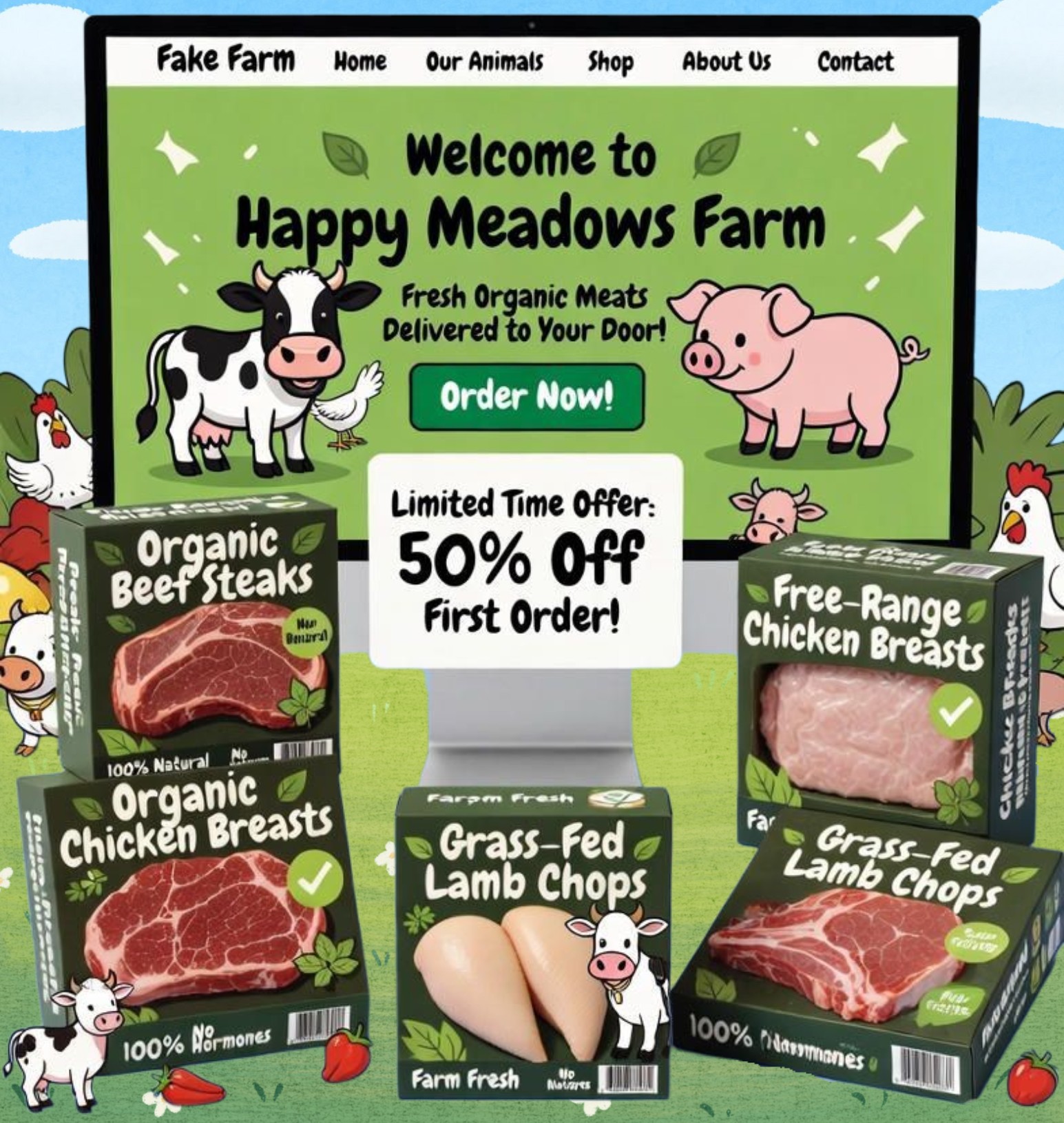
 Soaring food prices globally have created a perfect storm for online scammers. As consumers search for deals, bargains, and affordable sources of essential products, fraudsters exploit these pressures by offering fraudulent promotions designed to steal your money. Social media platforms have become the primary arena for these operations, allowing scammers to reach millions of potential victims in minutes. These hybrid scams combine the emotional appeal of small farms with the credibility of well-known retailers, creating difficult to resist offers.
𝐒𝐌𝐀𝐋𝐋-𝐅𝐀𝐑𝐌 𝐈𝐌𝐏𝐄𝐑𝐒𝐎𝐍𝐀𝐓𝐈𝐎𝐍
Fraudsters often set up social media profiles claiming to represent local farms or artisanal food producers. These pages feature images of pastures, barns, livestock, and produce, accompanied by narratives about harvests, family operations, and traditional farming practices. The posts aim to establish trust and authenticity. Consumers are drawn to the idea of supporting small-scale, ethical food producers, and the content often appears personal and engaging, including posts about freshly laid eggs, seasonal produce, or hand-selected meats.
𝐁𝐈𝐆-𝐁𝐑𝐀𝐍𝐃 𝐌𝐈𝐌𝐈𝐂𝐑𝐘
In parallel, scammers impersonate large retailers, creating highly convincing pages mimicking official branding, logos, and photography. One prominent example is the “Costco meat box” scam, where fake pages promise discounted or free bundles of meat or grocery items. Users are asked to complete surveys or pay a deposit to claim these offers. The combination of brand authority with the appearance of legitimacy entices users who are seeking deals during periods of rising food costs.
𝐇𝐘𝐁𝐑𝐈𝐃 𝐒𝐂𝐀𝐌𝐒
Some of the scams blend these two approaches. For instance, posts may claim a “local farm” has partnered with a major retailer to provide curated boxes of meat, eggs, or produce. By merging the emotional appeal of artisanal products with the perceived reliability of a known brand, these hybrid scams increase their reach and target both supporters of local food and consumers seeking brand-name deals.
𝐆𝐋𝐎𝐁𝐀𝐋 𝐄𝐗𝐀𝐌𝐏𝐋𝐄𝐒
- 🇦🇺 Australia – Fake butcher profiles advertise bulk meat packs or half-cows. Consumers are asked to pay upfront but receive nothing.
- 🇬🇧 United Kingdom – Facebook groups pose as family farms, offering eggs, honey, and vegetables. Sellers vanish after receiving bank transfers.
- 🇺🇸 United States – Fake “Costco meat box” pages promise discounted or free meat bundles. Users are directed to complete surveys collecting personal data and / or payment before any product is delivered.
- 🇵🇭 Philippines – Scammers impersonate local supermarkets, offering grocery bundles or produce boxes in exchange for registration on unverified websites.
- 🇨🇦 Canada – Hybrid scams advertise “farm-fresh eggs” or “premium meat boxes,” claiming partnerships with well-known retailers. Consumers are asked to pay or provide personal information, but the products never arrive.
𝐂𝐎𝐍𝐒𝐄𝐐𝐔𝐄𝐍𝐂𝐄𝐒 𝐀𝐍𝐃 𝐑𝐈𝐒𝐊𝐒
The risks associated with these scams are serious. Financial loss is common, as consumers pay for products which never arrive. Personal information gathered through surveys, forms, or registrations can be exploited for further fraud or sold to other scammers. Beyond immediate financial harm, these scams erode trust in legitimate small farms and well-known retailers alike. Additionally, when perishable items such as meat are delivered, food safety may be compromised due to unregulated handling and unknown sources.
𝐑𝐄𝐃 𝐅𝐋𝐀𝐆𝐒
Consumers can recognize these scams by watching for several key warning signs:
- Newly created social media profiles with minimal activity or inconsistent histories.
- Offers combining “farm-fresh” claims with brand-name discounts or giveaways.
- Requests for personal information or payment before any confirmation of a product.
- Use of stock images or stolen branding.
- Engagement bait requiring likes, shares, or tagging friends.
- Sellers disappearing after receiving payments or complaints arise.
- Offers which seem too good to be true.
𝐖𝐇𝐘 THESE 𝐒𝐂𝐀𝐌𝐒 𝐖𝐎𝐑𝐊
A global increase in the cost of living has driven consumers to seek bargains. Scammers appeal to the emotional connection many people feel toward local farms while leveraging the credibility and recognition of major retailers. By using social media engagement algorithms, these scams amplify their reach and increase the number of potential victims, making detection and intervention more difficult.
Online food scams blending small-farm impersonation with large retailer mimicry are a growing global threat. Rising food prices make consumers particularly vulnerable, and offers such as “family farm meat boxes” or “Costco grocery bundles” are often traps. Vigilance, verification, and critical thinking are essential. Consumers should confirm account legitimacy, question unrealistic deals, and avoid sharing personal or financial information unless they are certain the source is authentic.
- Log in to post comments