
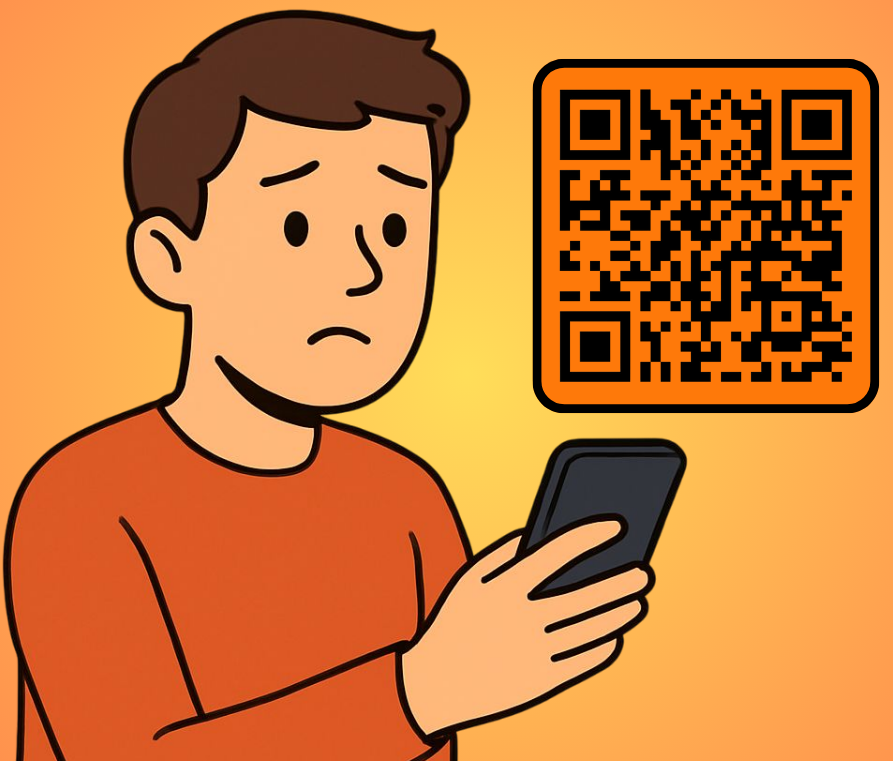
 In today’s world of digital convenience, QR codes are everywhere: on menus, ads, payment systems, and even packaging. While these scannable codes bring speed and simplicity, their careless use has opened the door to a dangerous scam: Quishing.
🔎 𝗪𝗛𝗔𝗧 𝗜𝗦 𝗤𝗨𝗜𝗦𝗛𝗜𝗡𝗚?
Quishing, short for QR code phishing, is a cyberattack that uses malicious QR codes to trick victims into revealing sensitive information or downloading malware.
These scams redirect users to fake websites disguised as banks, shopping sites, or delivery services. Once there, victims may hand over login credentials, payment info, or unknowingly install malware.
⚙️ 𝗛𝗢𝗪 𝗤𝗨𝗜𝗦𝗛𝗜𝗡𝗚 𝗪𝗢𝗥𝗞𝗦
📌 Fake QR Codes Placed – Attackers stick fraudulent codes over real ones on posters, meters, packaging, or send them in emails.
📱 Victim Scans – The code leads to a malicious site designed to mimic a trusted platform.
🔑 Data Capture or Malware – Victims enter login info, card details, or download spyware/ransomware disguised as updates.
💻 Exploitation – Criminals commit fraud, steal identities, or hijack devices for ransom or spying.
⚠️ 𝗪𝗛𝗬 𝗤𝗨𝗜𝗦𝗛𝗜𝗡𝗚 𝗪𝗢𝗥𝗞𝗦
🤝 Trust in QR Codes – Their everyday use lowers suspicion.
⚡ Speed Over Security – Scanning feels safe and quick.
📲 Mobile Weaknesses – Phones lack robust URL previews and security tools.
🏞️ Blending Physical & Digital – A QR code in a café or on a notice looks harmless but may be malicious.
📝 𝗥𝗘𝗔𝗟-𝗪𝗢𝗥𝗟𝗗 𝗘𝗫𝗔𝗠𝗣𝗟𝗘𝗦
🅿️ Parking Scams – Fake QR stickers placed on meters redirected users to fraudulent payment sites.
📦 Delivery Fraud – During COVID-19, attackers sent fake “tracking” QR codes via text and email, harvesting financial and login details. Delivery of the QR code could be by Email, text or even placement of a fake delivery notice in your mailbox. There have even been instances where scammers included fraudulent "scan for info" QR codes in cheap items shipped to random victims.
🎟️ Ticketing Cons – Fraudulent QR codes sold as event passes scammed victims into paying for tickets that never existed.
🖼️ Countertop Display Swaps – In cafés, shops, and restaurants, scammers can replace tip jar or menu QR code stands with cloned versions. This is even easier than tampering with point-of-sale machines, since displays are often left unattended on counters and trusted by customers.
🔋 EV Charging Stations – Fraudulent QR code stickers are placed over legitimate payment QR codes on EV Charging Stations
𝗧𝗛𝗘 𝗜𝗠𝗣𝗔𝗖𝗧 𝗢𝗙 𝗤𝗨𝗜𝗦𝗛𝗜𝗡𝗚
💸 Financial Loss – Accounts drained and unauthorized charges.
🧑💻 Identity Theft – Credentials misused for impersonation or fraud.
🏢 Corporate Breaches – Employee-targeted quishing exposes networks.
📉 Reputation Damage – Businesses with tampered signage lose customer trust.
𝗛𝗢𝗪 𝗧𝗢 𝗣𝗥𝗢𝗧𝗘𝗖𝗧 𝗬𝗢𝗨𝗥𝗦𝗘𝗟𝗙
🔍 Check the Source – Watch for tampered or suspicious QR codes.
🌐 Preview Links – Use scanners that show the destination before opening. AI with image upload capabilities can also be used to check the destination.
📱 Stay Updated – Keep phones and apps patched.
🔐 Enable MFA (2FA) – Stops criminals even with stolen passwords.
🚫 Be Careful in Public – When unsure, type the URL manually.
👩🏫 Employee Training & Code Placement – Train staff not only to recognize suspicious QR codes, but also to think about where and how codes are displayed. Wall-mounted or behind-counter displays are harder to tamper with than countertop stands, which can easily be swapped or covered
🛡️ Use Secure Scanners – Some apps block malicious sites.
𝗧𝗛𝗘 𝗙𝗨𝗧𝗨𝗥𝗘 𝗢𝗙 𝗤𝗨𝗜𝗦𝗛𝗜𝗡𝗚
As QR codes expand into digital wallets, smart cities, and contactless payments, scammers will keep evolving. AI-driven phishing sites and large-scale automated campaigns will make attacks more convincing.
Experts call for encrypted or authenticated QR codes, stronger mobile defenses, and more public awareness to counter this threat.
- Log in to post comments